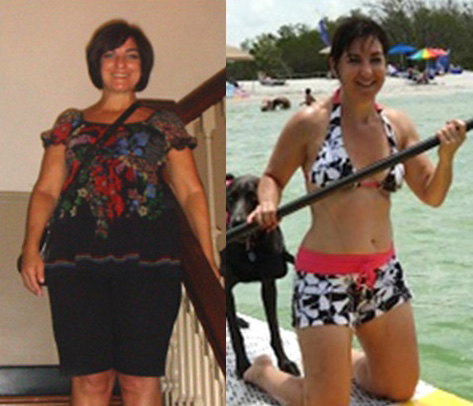
Biggest Loser -3 Weeks Down and Going Strong

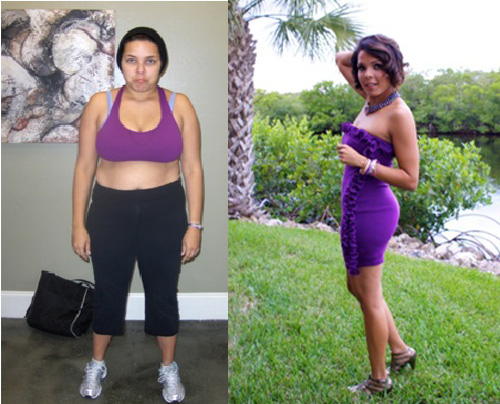
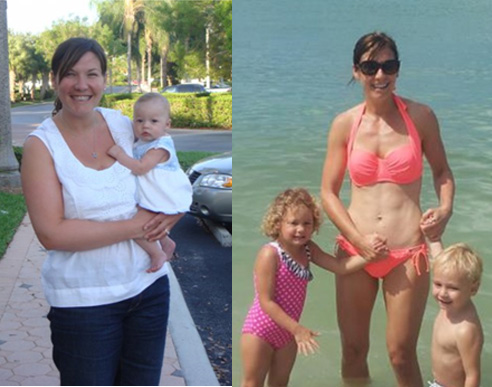
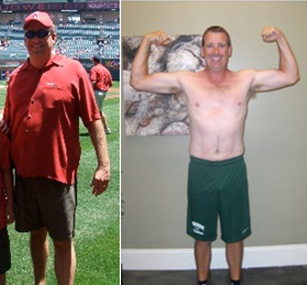
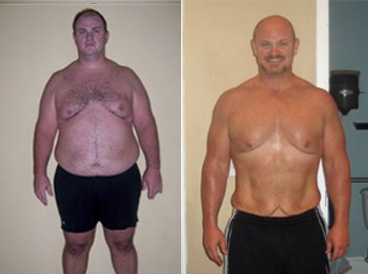
We just want to recognize everyone who is participating in our Biggest Loser contest. So far everyone that is participating has been achieving great results.

They have embraced not only working out but cleaning up their diet to see massive changes in their physiques.

One of the keys that has helped with results is making their challenge public. There are other people that know they are in a contest and you can see there is that extra bit of motivation to go the extra step or put down that second helping.

If you are looking to make some changes in your physique or health make it public, put yourself out there to help you keep on track.

So far with 17 contestants we have lost 36 pounds in 3 weeks.

Great job Everyone!

How much Water do YOU drink?

One of the things I tell my clients to do when they begin working out is DRINK MORE WATER! Especially down here in Florida in the summer, you can go outside and sweat just getting to your car!

You would be surprised at how drinking more water can take the weight off, I have a client who recently started drinking 100 ounces of water a day and within 2 days she dropped 1.5 lbs!

Just being more conscious of your water intake is important, sometimes when we feel hungry we are actually thirsty, sometimes when you get that afternoon low it can be a result of dehydration. I have a goal for my everyday water intake; I drink 100 oz of water a day. With the extreme heat and humidity here and taking into account about 60 minutes of exercise a day drinking that much water works for me. There are hydration calculators on the internet that you can figure out how much water is right for you based on your weight and other parameters.

Remember that water is the best source for your daily fluid needs. Other good beverages include milk, herbal teas, low-sodium broth, 100% fruit and vegetable juices. Soft drinks will also count toward your daily total of fluid, just remember that sugar sweetened soft drinks and fruit juices add extra calories to you daily diet that you don’t need.

Do Your Best!!

Three simple words. Take one minute and think about them and ask yourself, are you doing your best?

If the answer is yes, then congratulations. If no,Why not?

I think sometimes rather than just doing our best we are looking for perfection rather than just trying. I will wait till Monday to start my diet because it is a clean slate. Have you ever heard that? I hear it all the time and when you really break it down it makes no sense at all. I can’t workout because I don’t have the perfect plan. You can’t go for a walk? You can’t do some pushups?

How about we stop looking for perfection and just start. From there just do your best and the rest will take care of itself.

Welcome!!!

Welcome to Florida Fitness Coaches new blog, we hope you will forgive our mess as we get everything setup and ready for everyone to enjoy.

Hello world!

Please be patient as we migrate to our new blogging service.


Thank you

Bonita Media

We had a great post regarding our business on Bonita Media’s weblog. There is a ton of great info there.

Check it out:

http://bonitamedia.wordpress.com/

Reduce Christmas Stress!

Reduce Christmas Stress!

1.Recognize that overwhelm isn’t real.
It’s not something that attacks us. It’s a feeling we experience based upon a belief there’s too much to do and too little time to do it. It’s fear– plain and simple. And once we recognize and acknowledge it, we’re better equipped to deal with it.

2.Be grateful.
Just think, the alternative is that you have little to do and you’re bored. Appreciate the fact that you have the opportunities and the projects that allow you to contribute to the world.

3.Accept the fact you’ll never be caught up.
If you’re a person of action–someone with goals and aspirations–it’s not too likely you’ll ever have an empty inbox. The times in which we live and our ability to do meaningful work throughout our lives leads me to believe that we’ll always have things left to do.

4.Understand that we can only think about one thing at a time.
We may be able to multi-task and we may be able to switch our thoughts very rapidly, but we can hold only one thought in our mind at a time. Trying to think about more than one thing at once is very tiring and frustrating.

5.Be selective.
The biggest weapon you have in fighting overwhelm is your ability to prioritize what you need to do. By making intelligent choices based upon urgent, non- urgent, important and non-important, we can focus better.

6.Delegate.
Learn to gain the assistance of others. People like to help, but you have to ask. Anything that can be adequately done by someone else should be delegated. It’s an important skill worth developing.

7.Learn to say no.
Our feelings of overwhelm largely come from taking on too much. If you’re asked to do something, don’t be too quick to accept the assignment. You might think you’re being a nice person, but if you succumb to health problems because of it, you won’t be nice for very much longer. If you’re TOLD to do something (by a boss, for instance), ask them which things they would like to have you put off while you complete the new assignment.

8.Take care of yourself.
There will always be times when we’re called upon to put forth extra effort. And we can if we’ve been taking good care of ourselves right along. For those periods where extra drive, a few extra hours and hard work are required, we need to be in good shape–mentally and physically. If we’ve been eating, sleeping and exercising properly, we’ll be far better prepared for the extra stress our lives require. Remember to take breaks. The tendency for many of us is to work harder and longer. In actuality, we can get more done in less time and with less effort if we take breaks.

9.Breathe.
When we feel overwhelmed, we have a tendency to tighten up instead of relax. It seems like there are many things we HAVE to do, but the only thing we REALLY have to do is breathe. Take some long deep breaths and feel yourself returning to the present.

10.Focus on the task at hand.
If we’re thinking about what’s NOT getting done or all the other things we have to do, we can’t focus well on what we’re doing now. Think about what you ARE doing rather than what you’re NOT getting done. Otherwise, you’re going to be defeated by your feelings of overwhelm.

(C) Copyright Success Networks International, Inc. & Michael Angier. All rights reserved. U.S. Library of Congress ISSN: 1529-3378

Can you give me some tips for maintaining my weight loss?

Question: I have lost weight many times but this time I am determined to keep it off. Please give me some tips for maintaining my weight.

Answer: If you are determined to keep the weight off then you will be motivated enough to do what it takes to maintain. The maintenance phase of weight loss is the most challenging because the excitement of the weight loss experience has come to an end, and the old habits start to creep back. The National Weight Control Registry (NWCR) is an organization of people who have lost weight and maintained it for a year or more. Of the NWCR’s 5000 members, the average person has lost 66 pounds and kept it off for 5.5 years. Here’s a link where you’ll find more of their data http://www.nwcr.ws/Research/default.htm.

Aside from the NWCR, other experts in the field have some suggestions. Known internationally for his 60 years of work in the field of nutrition, Dr. Nevin Scrimshaw, a 90 year-old MIT professor and an active snow skier, shares his secrets. After having triple bypass surgery 25 years ago he decided to get serious about his health and adopt a serious diet. He eats fish, white meat poultry, lots of fruits and vegetables, and focuses on weight control and physical activity. Scrimshaw says one of the main secrets to health and longevity which people often miss is consistency. A healthy lifestyle is not something an individual adheres to on weekdays or most days. It must be followed on weekdays, weekends, and holidays alike. Members of the NWCR monitor their weight, often daily, and are able to take immediate action if the numbers begin to rise. The other key element to successful weight maintenance is physical activity. Those who are active throughout the day, rather than for one short period, are the most successful. An active lifestyle involves walking versus driving, doing household chores while watching television, taking stairs instead of elevators, standing versus sitting, etc., and every minute spent moving contributes to healthy weight loss and maintenance.

“The critical point to understand is that diet and exercise and healthy living are not to be done when they are convenient or when an individual is actively trying to lose weight; they are to be integrated into a way of living that needs to endure for the span of a person’s life.”

What’s the real secret between success and failure?

Between winners and losers?

Between ordinary and extraordinary?

One word:

Action!

This applies to your results in health and fitness

You KNOW how to get bigger. You KNOW how to get leaner. You KNOW how to get stronger.It’s not a lack of knowledge for most people — it’s a lack of application.

I think people know what to do, but just aren’t doing it.

e.g. for getting lean: Did you train today? Did you do something that will elevate your metabolism? Did you eat supportively? Post workout shake? 5 meals? Protein at every meal? EFA’s?

Stop trying to figure out a better plan if you aren’t already doing all of the above.

A lot of the time it’s an application of knowledge that is the missing link – not a lack of knowledge per se.

Don’t wait for the perfect scenario to start that fitness plan just start. In the beginning it is about simply DOING it.

It sounds corny but just do your best. Some days your best will be better than others, but it will still be your best for that day and that is good enough.

Seniors and Balance Training

Research has shown that as we age, neuromotor skills decline which is associated with falls and loss of functional mobility. One way to prevent many of these incidents is to perform balance training within a health and fitness program.

Balance training has been shown to be beneficial in improving dynamic joint stabilization. An example of dynamic joint stabilization could be the way our foot and ankle react to the demands of activities such as standing on one leg or simply walking. Muscles that control the position and coordination of the foot and ankle must work with optimum levels of balance and stabilization to ensure that we do not lose balance and possibly become injured. To improve balance we need to follow a progressive and systematic program to allow for adaptations in balance to occur.

Balance can be trained to promote results in stabilization, strength, or power. Balance stabilization training involves little to no joint motion of the stance leg and is designed to improve joint stability. Standing on one foot would be an example of a balance stabilization exercise. Balance strength training involves challenging yourself through more ranges of motion such as in a step up to balance, lunge to balance or a single leg squat. This leads to increased neuromuscular efficiency (control) of the entire body. Finally, balance power training increases the body’s ability to start and stop quickly, improving our ability to “put on the brakes” when necessary (if you’ve ever stepped off a curb you did not know was there, you know what I am talking about). Hopping from one foot to the other and landing with good form would be an example of a balance power exercise.

An example of a balance stabilization program progressions may look something like this:

1. Single leg balance with external support (ex. hand on table or chair)
2. Single leg balance with reduced support (ex. 1 finger on table or chair)
3. Single leg balance (no external support)
4. Single leg balance with stance foot on an exercise mat
5. Single leg balance with stance foot on a ½ foam roll
6. Single leg balance with stance foot on an airex pad

This sample program could eventually give way to exercises involving more range of motion, or exercises involving increased speed of motion. Your exercise selection will be determined by your ability to adapt and the challenges that you need to prepare for.

So why would we follow this type of sequence? The reason is simple. Research demonstrates that balance is improved by exposing the body to variety of proprioceptively-enriched environments (progressively unstable, but controlled. This allows for proper feedback to be relayed from the nervous system to the brain, where it is processed and turned into a motor pattern (your new, effective way of doing things). Once enough good information has been digested by the brain and central nervous system, the appropriate movements will be initiated when needed. In short, good practice = good performance.

Now that you’re becoming familiarized with balance training, let’s review a few key components when performing balance training:

1. Choose exercises that are simple and safe
2. Choose exercises that are slightly unstable yet controllable
3. Make sure that you progress when necessary or able

Get Adobe Flash playerPlugin by wpburn.com wordpress themes